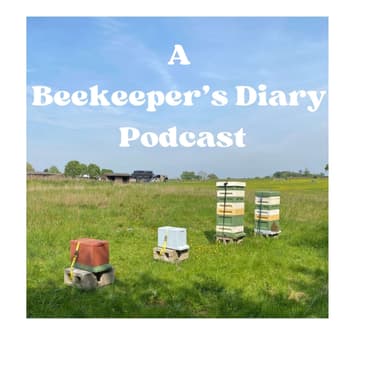
The golden haze of late summer transforms the apiary landscape into a sea of beige, punctuated only by the occasional cowslip, ragwort, and thistle. Standing here on August 17th, the silence is almost deafening – a stark contrast to the vibrant buzz of high summer just weeks ago.
This pivotal moment in the beekeeping calendar brings unique challenges and essential tasks. As natural nectar sources dwindle, wasps become increasingly bold in their attempts to raid honey stores. I've begun the defensive preparations by reducing the hive entrance, with plans to narrow it further to a single bee-width next week. This simple adjustment gives my colony the upper hand in their defensive efforts without impeding their necessary comings and goings.
Varroa management takes centre stage now, with my first week of treatment showing promising results. The sticky monitoring board reveals a significant mite drop – confirmation that both the parasite pressure existed and that the treatment is working effectively. A quick, targeted inspection of just a few frames revealed eggs at the 2-3 day stage, providing the reassurance of queen presence without unnecessary disturbance to the colony.
Winter preparations have officially begun with the installation of a top feeder and the first substantial syrup feeding. This marks the beginning of a feeding regimen that will continue until approximately 20kg of supplementary stores have been provided – essential insurance against winter starvation. The entire hive configuration has been optimised for the coming months, with insulation plans ready for implementation once feeding concludes.
Nature's signals of seasonal change surround the apiary – fewer swallows overhead as they prepare for migration, my first European hornet sighting of the year, and the persistent song of grasshoppers in the parched grass. .
Find me on Instagram or by visiting beekeepersdiarypodcast.com. The community of listeners is growing worldwide, and I'd love for you to join this exploration of the fascinating world of honey bees through the changing seasons.
Welcome back to a beekeepers diary podcast. We are in the middle of August. Where are we at, quick look at my phone, 17th of August, 11.56am. Standing here looking across a very sunburned field, it is mostly a sea of beige, apart from the odd pop of white from a cow slip, a little bit of yellow from the odd bit of ragwort and a tiny bit of purple from thistles, but mostly everything's gone over now. Looking in the distance, I can see some buddleia still in flower. The brambles browning over. The lime trees are tinged with gold. As the flowers go over, virtually silence in the air. I've had two swallows passing overhead, but the constant sound of them hunting in front of me is no longer here. The only sound you might be able to hear is an annoying wasp investigating my head. No, thank you.
Speaker 1:On that topic looking Looking at the hive today, inspecting the entrance, there are a few more wasps. Above I lie can hear a swallow right now. Um, yeah, wasps at the entrance, two or three, um, not successfully making it into the hive, but I'm taking uh note of that and I have cut a bit of foam and squished it into the entrance and reduced it probably by half, half and next I have got a metal entrance that I normally use and I've got a bit of sliding metal on it so I can slide the entrance right down to one bee space so only one bee at a time can get through that gap. There's still quite a lot of flying activity at the moment and the bees are successfully defending themselves from the wasps, so I'm going to leave it as that for this week. Looking at the hive, obviously, last week I did my first week of Varroa treatment and I've pulled out the board which you put underneath the hive, which you put a sticky substance on, so you can see what's dropped down onto the would have been the ground and there's a reasonable Varroa drop there. So, of note, I have plenty of Varroa in the hive that my CO2 inspection didn't reveal. But, plus point, this Varroa treatment is killing Varroa, so that is good. So I've cleaned that board off of that detritus, resprayed some one calorie cooking spray on the board and spread it about, ready to see what happens over the next seven days.
Speaker 1:And quick inspection. I only checked two or three frames in the brood nest because I'm reticent to go rampaging through the hive at this time of year for fear of squashing a queen unnecessarily. But frame two, there were eggs. Probably day two or three for the eggs as they were starting to lean over not the vertical alignment of day one eggs. So I've taken that as evidence of the Queen being here in the last two days two, three days. So that's good enough for me at this time of year. Called it a day there but hard back together then.
Speaker 1:What I have now done is I've put a feeder on the top of the hive which is basically a big tray with recesses in it that you can pour a liquid into, and it's got its own little entrance that bees can crawl up into. They can't get into the reservoir and go for a swim, but they can get their faces at the syrup that we put in so they can drink and then take it down into the brood nest. So I put three kilograms of sugar to one and a half liters of water, kettle water and I mixed that till it's dissolved. I haven't heated it any further, let that dissolve. So it's about three and a half kilos of feed roughly I've put in today, which is enough for one half of the feeder. The feeder is split into two sides, so I've filled up one side with food, basically, and put it all back together. So now I've got a floor, a super for collecting stores, the brood box, a feeder and a lid is my configuration currently and that'll be it for winter, and the only thing I'll change is once we've fed probably up to 20 kilos of feed over the next few weeks, the feeder will come off, the lid will go on and then all that I do extra is put some extra insulation around the top, a bonnet of cellotex, as you will, nature-wise, walking up to the hives it was nice.
Speaker 1:I saw first time this year a european hornet was on the cowslips, a little skulk about, which is nice to see. I wasn't quick enough with my phone to get some video, but it was nice to see. Gold finches were overhead when we came in. Grasshoppers are still singing. Hopefully you can still hear that. I'll give you five seconds of ambient noise. Cue a plane flying over. Hopefully you can just hear some swallows as well. Definitely far fewer of them this week, so they're obviously starting to make their move.
Speaker 1:I'll be back next week. Do a bit more feeding. Check the Varroa tray again. I noticed some bright orange pollen going in the hive today. I don't know what that would be at this time of year, so I'm going to have to get my pollen chart out and see what it is. If anyone knows, let me know. You can look me up on Instagram beekeepers diary podcast, I think it is, so you'll find the links to that off the website as well beekeepersdiarypodcastcom. Tell your friends, spread the word, slowly expanding my listenership. Quite a few surprising countries around the world listening in. So thank you, much appreciated. Thank you, mr Crow. Right, I'll leave you with that and I'll catch you next time.